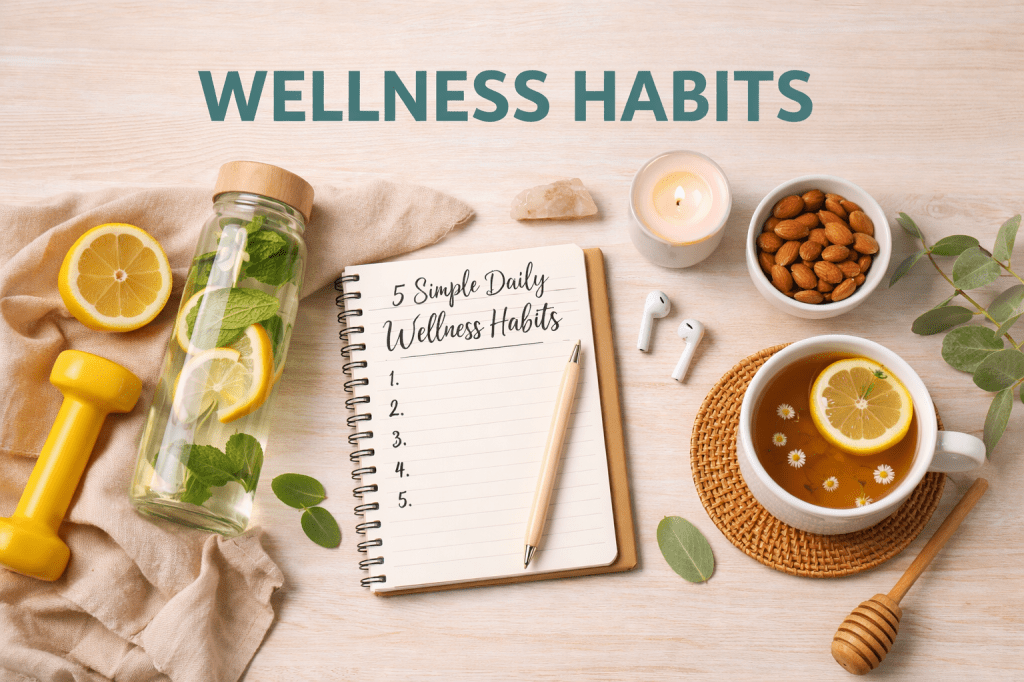
Feeling overwhelmed by wellness advice? The good news is that small, consistent changes can make a huge difference. You don’t need a complete lifestyle overhaul to feel healthier, more energetic, and happier. Here are five simple daily habits you can start today that have a big impact on your overall well-being.
1. Drink More Water
Hydration is the foundation of wellness. Drinking enough water helps boost energy, improve digestion, and even keep your skin glowing. Try carrying a water bottle with you or setting reminders throughout the day.
2. Move Your Body
You don’t need a gym membership to stay active. Even 15–20 minutes of walking, stretching, or yoga daily can lift your mood, improve circulation, and support your overall health.
3. Prioritize Sleep
Sleep is when your body repairs itself and your mind recharges. Aim for 7–9 hours each night, and create a bedtime routine that helps you unwind and relax.
4. Practice Gratitude
Taking a few minutes daily to reflect on what you’re thankful for can reduce stress, increase positivity, and improve your mental well-being. Try writing down three things you’re grateful for each morning or before bed.
5. Eat Mindfully
Focus on balanced meals and listen to your body’s hunger cues. Eating mindfully can help you enjoy your food more and prevent overeating. Include more fruits, vegetables, and whole foods for lasting energy.
Conclusion:
Wellness is a journey, not a destination. Start with these small habits, be consistent, and celebrate every win along the way. Your body and mind will thank you!
An upset stomach can ruin your whole day. Nausea, cramping, and that heavy, uneasy feeling make it hard to eat, rest, or even think straight. The good news is that many mild stomach problems can be soothed at home with simple, gentle remedies.
In this article, we’ll walk through easy ways to calm your stomach, what to avoid, and when it’s time to see a doctor.
Note: These tips are for mild stomach upset. If your pain is severe, long-lasting, accompanied by high fever, blood in vomit or stool, or dehydration, seek medical help.
1. Start with clear fluids
When your stomach is irritated, the first step is to rest it.
you have acid reflux that worsens with mint you have heartburn after using it
🍞 4. Follow the “BRAT” diet for a day or two
Once vomiting or nausea eases, eat bland, gentle foods.
The BRAT diet stands for:
Bananas Rice Applesauce Toast
Other calming options:
plain crackers oatmeal boiled potatoes clear soup or broth
Avoid:
spicy food greasy food heavy dairy caffeine
Eat small portions at a time.
😴 5. Rest your body — and your mind
Your stomach and brain are linked. Stress can make stomach pain worse.
Helpful ways to rest:
lie on your left side use a warm compress or heating pad on your abdomen take slow, deep breaths sleep if you can
Avoid hard exercise until your stomach settles.
🚫 6. What to avoid when your stomach is upset
It’s just as important to know what not to do.
Avoid:
smoking alcohol pain relievers like ibuprofen or aspirin (can irritate the stomach) large meals very spicy foods heavy fried foods
If you must take pain medicine, acetaminophen is usually gentler on the stomach, but always follow label directions.
🦠 7. Could it be a stomach virus?
If you have:
vomiting diarrhea fatigue low fever body aches
…you may have a stomach virus. These usually pass in 1–3 days.
Focus on:
hydration rest bland foods good handwashing to avoid spreading it
Seek medical help if you show signs of dehydration:
dry mouth very dark urine or not urinating dizziness extreme weakness
When to call a doctor
See a doctor urgently if you have:
severe stomach pain blood in vomit or stool black, tarry stools high fever pain after injury persistent vomiting over 24 hours signs of dehydration chest pain with nausea
Trust your instincts — if something feels seriously wrong, get checked.
Final thoughts
Your stomach does a lot of work every day. When it’s upset, it’s usually asking for rest, hydration, and gentle care. Listen to your body, go slow, and be kind to yourself while you recover.
And remember: your health and your relationships are connected. Stress, worry, and emotional tension can all show up in your stomach — so take care of your mind and heart, too.

 Love and Wellness Tips